What Was Made for a Cold War to Never Happen Again
Why Did the Cold War End?
The half a century conflict ended in 1991, but why?
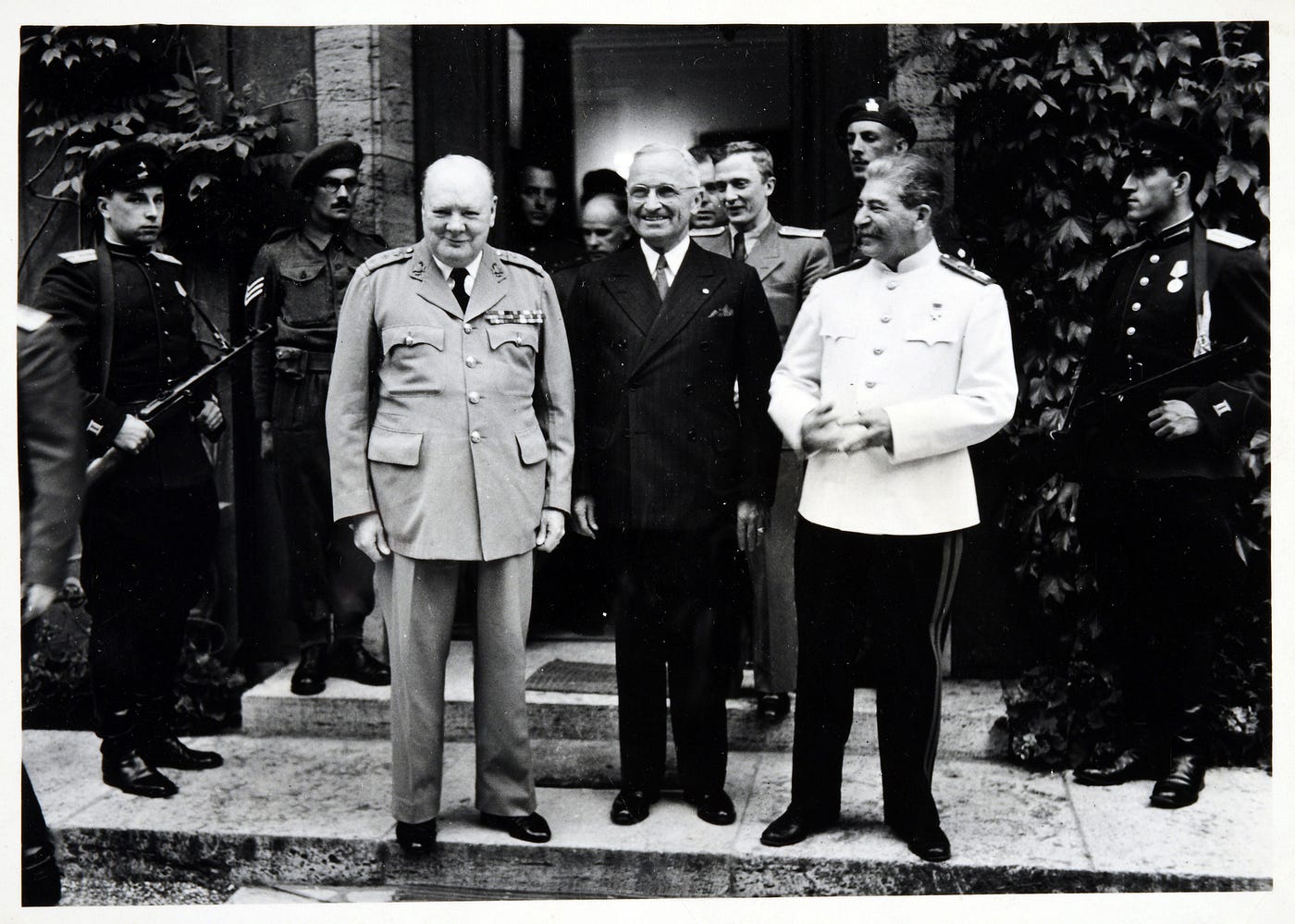
 West hy the Cold War ended is a highly debated topic among International Relations (IR) scholars and historians, mainly due to it being a major shock. Many different theories in IR, indicate to diverse factors causing the end of the Cold War.
Realists for case, who believe states would never willingly give upwardly power, were almost shocked, as the Soviet Union under Mikhail Gorbachev did exactly that. While neo-conservatives hailed the U.s.a. (US)President Ronald Reagan and his policies equally the decisive factors which 'won it'. Even so, constructivists contest that it is Gorbachev who should be seen as the critical factor needed to end the Common cold War, as the Soviet leader adopted a gear up of new ideas, irresolute the narrative referred to equally new thinking, which was characterized by ane notion:
A "nuclear war cannot be a ways of achieving political, economical, ideological, or any other goals."
Notwithstanding, many other scholars and historians disagree with the notion of one factor proving decisive just rather a combination of factors, which were out of Gorbachev and Reagan's control. These include ideas of the inherent weaknesses in the Soviet system, the subversive furnishings of the Afghan War, and the critical outcome of nationalism in the Soviet Union'south satellite states.
This commodity volition assess the main factors bringing about the end of the Common cold State of war, analyzing Gorbachev'southward leadership and policies, Nationalism, and the Afghan War, to make up one's mind how and why the almost one-half a century global rivalry ended. This will be washed by arguing that the Cold War concluded not due to a single gene, but rather a consequence of a number of factors that came together at a certain juncture and that without 1 of these factors, the Cold War may take continued.
Gorbachev'southward Leadership
Gorbachev's leadership, according to Secretarial assistant of State George Shultz and Ambassador to the Soviet Union Jack Matlock, of the Reagan assistants, believed that without Gorbachev's coming to ability and abandoning of the Marxist-Leninist credo, Reagan's policies would take had a null effect. This pb historian Geir Lundestad to land that:
"If Gorbachev had not come up to power, the Cold State of war would presumably even so be continuing."
Gorbachev became General Secretary of the Communist Party in March 1985, and it was clear from the onset that his leadership would be far different from his predecessors, firstly considering of him not beingness another elderly leader and having far more liberal ethics. Another reason is due to his willingness to open positive dialogue, for instance, in December 1984 Margaret Thatcher met with Gorbachev and concluded that:
"I Similar Gorbachev. Nosotros can exercise business concern together."
Later in November 1985, Reagan and Gorbachev met in Geneva for the first time, no agreements were made, but the talks were extremely positive and both wanted to develop a dialogue between East and West. All were encouraging signs that a resolution could be fabricated, even more then with statements past Gorbachev where he likened the struggles of humankind to those of mountain climbers, stating:
"They can either climb on together to the mountain peak or fall together into an abyss."
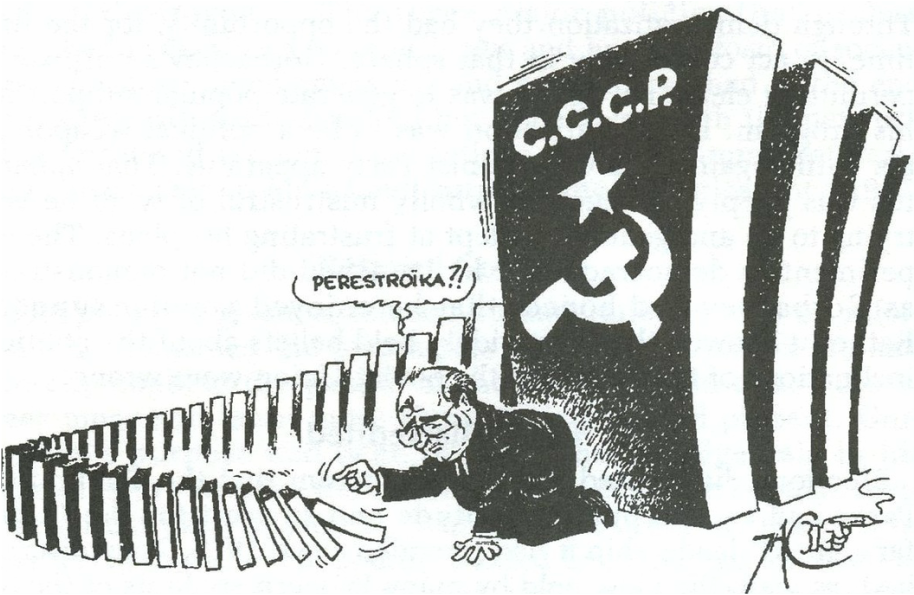
The truly instrumental points of Gorbachev being a significant factor at the finish of the Cold State of war was via the initiation of perestroika and glasnost (reform and openness) and his new thinking.
Perestroika (reform)
Perestroika, aimed at tackling the dull economical developments of the Soviet Union (USSR) and the inadequate living standards, the reforms introduced laws which allowed for the creation of cooperative businesses, removing restrictions on foreign trade and decentralizing, making the economic system of the USSR far more palatable for the Western globe (capitalism).
Reform was also seen every bit a necessity because of the vast amounts of spending on the arms race and an expansive foreign policy, which accounted for at least twenty% of Gross domestic product (gross domestic product), with a growth rate that was declining compared to that of the US. To further worsen the situation oil prices were falling throughout the 1980s, and pushed the USSR further into economic dubiousness, leaving the people of the Soviet Union to suffer. Gorbachev discovered this on his visits to cities within the USSR, such as Tyumen in Western Siberia, where he told his chief reformer that:
"Weather in Tyumen were fifty-fifty worse than you said."
Gorbachev similarly said in 1987 during a trip to Murmansk that:
"Information technology was distressing and hurtful to listen to workers rebukes yesterday,"
He realized the Cold War was having negative effects on his people.
Glasnost (openness)
Alongside perestroika, glasnost was also a result of it, as Gorbachev was convinced that the initiation of perestroika was impossible without glasnost. He also deemed it a necessity for the people of the Soviet Union to be aware of the activities of the USSR, increasing the transparency and openness of governmental institutions.
The openness allowed citizens to hash out problems they had with their system and was ofttimes encouraged by Gorbachev. Glasnost led to citizens being made aware of the events taking place in Eastern Europe, allowing for a broader popular movement, like nationalism, to accept place. Glasnost besides shone a light on the failings of the Afghan War, besides as events like Chernobyl in 1986, causing the public to be far more than immersed in the political life of the USSR, forth with a gratuitous and uncontrolled media allowing citizens to be far more than critical of their government.
In terms of foreign policy, glasnost increased confidence of the Soviet Union away, deeming information technology a possible place for investment, easing the tensions of the Cold State of war. The new thinking introduced by Gorbachev created a paradigm shift, shocking the world, and ending the threat of annihilation of humanity from nuclear war.
New thinking created a new discourse, whereby the concept of class struggle was abandoned, and priority put on universal human interests and increasing the interdependence of the world. It also changed Soviet foreign policy, with common security no longer based on armed services instruments just rather by political means, conspicuously shown by the restarting of negotiations in 1986 to fleck intermediate-range nuclear missiles, the treaty was agreed upon and signed in September 1987. The de-escalation of the Cold War would not have occurred were information technology not for new thinking and the changing of USSR strange policy under Gorbachev'southward leadership.
Nationalism
Nationalism played a pivotal role in catastrophe the Cold War, seeing the fall of communism throughout Eastern Europe, giving rise to what is known every bit the Revolutions of 1989. This later led to the Malta Summit, three weeks later the fall of the Berlin Wall, where the Cold War was declared to have ended.
Countries inside Eastern Europe throughout the 1970s and 1980s began to show an increasing nationalist sentiment, specially in Poland and Hungary, where opposition was the strongest due to them existence greatly frustrated with their poor economic situations and the repression they suffered in 1956.
The dissatisfaction with the Soviet organization was made articulate by Hungarian Communist party leader Karoly Grosz, who in May 1989 said:
"We accept a huge foreign debt, an empty treasury, widespread social discontent and the population is disillusioned. We must brainstorm afresh once more."
It also appeared that by the 1980s according to Lundestad the Eastern Bloc countries no longer believed in communism, their faith in the system was gone, made articulate in Poland by the germination of the independent trade spousal relationship, Solidarity, which was the start merchandise spousal relationship of the Warsaw Pact countries not to exist controlled by a communist party. The USSR could only no longer afford their 'colonial' possessions in Eastern Europe, similarly to other empires, namely Uk.
The Soviet economy at the time was in a dire state of affairs, and the Eastern Bloc was no longer profitable and past all means, became a brunt to the Soviet Spousal relationship. The Reddish Army also became less of a threat to Eastern Europe, assuasive the campaigns of ceremonious unrest and agitation for change to have place, without fear of retribution.
Furthermore, the disbelief in the Soviet system, alongside the encouragement Gorbachev gave Eastern Europe, to pursue their own communist model, assertive there was not one communist system to follow, reinforced the nationalist sentiment. According to Lundestad, Gorbachev alluded to Eastern Bloc countries to avoid the Soviet path, encouraging Eastern European states to determine their ain fate, which they eventually did, proving to be a pivotal factor in catastrophe the Cold State of war.
Soviet-Afghan War
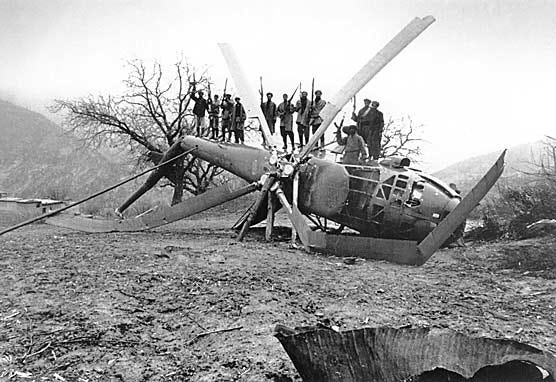
The Soviet-Afghan State of war from 1979 to 1989, is often equated every bit the USSR'southward 'Vietnam' and too proves to be another vital factor catastrophe the Cold State of war. The Soviet government promoted the war as one of 'national liberation' and according to researcher Lester Due west. Grau left the revolutionary sponsoring Soviet Matrimony struggling to come to grips with the war, resulting in the suppression of it by the Soviet media for several years.
Still, once Gorbachev initiated glasnost, the public was made enlightened of the atrocities which were existence committed, for instance, the killing of an estimated 562,000 to 2,000,000 Afghan civilians, which undermined the legitimacy of the Soviet Marriage internally and externally. As public knowledge of the war expanded, so did the opposition.
The state of war toll the USSR an estimated $50 billion from 1979 to 1986, while the population was suffering dire economical issues, exacerbated by the state of war. To add the Soviets were experiencing terrible losses morally, economically, and militarily. For instance, many of the soldiers fighting were conscripts which led to poor combat performance, worsening morale. Military equipment losses were heavy, from 1980 to 1985 the Soviets lost 340 tanks, 655 armoured vehicles, and 640 helicopters, all of which embarrassed the USSR further.
The losses that the Red Regular army experienced confronting what was deemed a lesser opponent, according to professors Rafael Reuveny and Aseem Prakash, helped heighten the nationalist sentiment in non-Russian republics inside the Soviet Matrimony, as they once viewed them equally unbeatable, but now they did not.
The Cherry Army was no longer feared to the same caste, their ability to practice power in other regions was questioned, as was the leader's religion in the military in suppressing anti-Soviet resistance, as was done in East Germany in 1953, Hungary in 1956, and Czechoslovakia in 1968, helping bulldoze the nationalist movements and culminating in the Revolutions of 1989.
Conclusion
The Common cold War and how it was brought to an finish, has generated much debate amongst historians and theorists, due to the sudden end of a phenomenon that realists believed would exist everlasting, leaving them the most surprised once it suddenly came to an finish. The theories which are debated and contested between different schools in IR have generated highly credible and logical arguments virtually the catastrophe of the Cold State of war, just many ascribe only one factor, such every bit the leadership of Reagan, bringing about the cease of the 40 years of tensions and proxy wars.
The end of the Cold War brought nigh by iii factors, Gorbachev's leadership, Nationalism, and Afghan War, all of which are interconnected and culminated into a betoken, forming a perfect political storm bringing about the end of the Common cold War. Without one of these factors, the one-half a century of political tension and a potential nuclear state of war may not have concluded.

Source: https://historyofyesterday.com/why-did-the-cold-war-end-cc0e07c05977
0 Response to "What Was Made for a Cold War to Never Happen Again"
Post a Comment